


[ad_1]
Actuality has no order—that’s why we’re at all times making an attempt to impose our personal framework on it, with the assistance of notions comparable to “karma” and “Mercury in retrograde.” The conventions of storytelling, conversely, are blessedly clear and concise; they permit us to a minimum of fake {that a} plot may cohere into some kind of plan. These days, although, the foundations have appeared trickier to comply with. On tv, probably the most formidable parables about humanity are additionally those having the toughest time conceding to narrative, as if they’ll’t think about anymore {that a} hero is likely to be coming to avoid wasting us. What occurs when tales begin to break down within the face of relentless human failure? Properly, we get issues like Apple TV+’s Extrapolations and Amazon’s The Energy: sprawling, cynical, terribly costly exhalations. Characters are surprisingly passive; they react to circumstances slightly than act on their wishes; they shuffle via riots and Class 4 hurricanes and political turmoil with none level or goal of their very own.
In actual life, this type of static inertia is desperately believable. On tv, although, it’s deadening. Each reveals left me feeling not a lot numbed as etherized after I sat via eight or 9 hours of erratic, unstructured angst. Extrapolations, Scott Z. Burns’s speculative anthology collection concerning the potential way forward for Earth amid local weather change, has one of many starriest lineups of any non-Marvel product this decade, but each actor appears nothing wanting exhausted. In a single scene, a zoologist performed by Sienna Miller apologizes to a communicative whale (voiced by Meryl Streep) about people’ infinite capability for mendacity; in one other, a personality performed by Matthew Rhys (and clearly impressed by Donald Trump Jr.) is gored to demise by an avenging walrus. Oddly, neither scene is performed for comedy. I laughed, however I don’t suppose I used to be presupposed to.
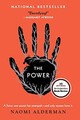
The Energy, Amazon’s nine-part adaptation of the 2017 novel by Naomi Alderman, initially appeared extra promising, even when it arrived with the form of hot-pink branding and inventive musical chairs that often spells hassle. The guide had extraordinary timing; it was launched within the U.S. the identical month that allegations towards Harvey Weinstein ignited a mass motion towards sexual abusers. Its well timed premise was that teenage ladies have developed the ability to generate electrical energy—an influence they’ll additionally awaken in older ladies. Vaguely described as akin to the skills of electrical eels, and seemingly associated to the estrogen in ladies’ our bodies, this capability turns them into dwell weapons, upending social and political hierarchies of energy. Occasions within the years since—protests in Iran over ladies’s freedom of selection, a social-media-driven disaster of despair amongst youngsters, the overturning of Roe v. Wade—have solely heightened the intrigue of Alderman’s alternate timeline. Who wouldn’t need to evenly zap an individual or two, lately?
The present initially winks at this impulse. It opens with Margot Cleary-Lopez (performed by Toni Collette), the mayor of Seattle, making a speech earlier than being led away by two armed guards. “We by no means dared to think about it,” she says. “A world that was constructed for us. The place we made the foundations … The place we had been those to be feared.” As she continues in voice-over, we see a montage of characters: a girl having her hand kissed by a soldier on his knees, a lady with a halo of sunshine behind her darkish curls, one other woman strolling confidently down a faculty hallway. Fingers begin to crackle; shortly, we see cities—and other people—burn. “Each revolution,” Margot says, “begins with a spark.”
Barely, although, is there a second to benefit from the provocation of the premise. Just like the novel, the present focuses on a number of feminine characters, every supposed as an example completely different iterations of energy and all of the ways in which energy can and will probably be abused. Margot represents political drive. Roxy (Ria Zmitrowicz), the loudmouthed 17-year-old daughter of a London mobster, is a younger lady making an attempt to make it in a hypermasculine surroundings, and her new talents and lack of scruples make her bodily ferocious and emotionally risky. Allie (Halle Bush), a foster baby who goes on the run after killing her abuser, reinvents herself as a doubtful non secular chief after connecting with a robust, maternal voice in her head. Margot’s daughter Jos (Auli’i Cravalho) reveals how teenage ladies are drastically liberated—and enabled in not solely constructive methods—by a complete lack of worry. Tatiana Moskalev (Zrinka Cvitešić), the spouse of a ugly autocrat within the fictional nation of Carpathia, appears destined to wrest a few of her husband’s brutal authority for herself.
The present clearly needs to underscore that ladies, given an excessive amount of energy, could be as dangerous as males. However in focusing so dogmatically on its central argument, it forgets to inscribe any of its characters with a motivating pressure. Roxy bumbles round London, annoying folks by taking pictures sparks at them. Allie bumbles round a convent populated by different misplaced ladies, often following the directions of the voice in her head. Margot and her husband, Rob (John Leguizamo, desperately wasted), have the identical quarrel over and over about her lack of curiosity in something aside from her job—her all of a sudden extraordinarily demanding job as mayor of a serious American metropolis the place planes are falling out of the sky, ladies are being zip-tied at college, and politicians are contemplating placing hormones within the water to attempt to defuse these with the ability.
Globally, issues are much less repetitive. The travels of Tunde (Toheeb Jimoh), a journalist and a wannabe male ally, let the present discover how this new energy—explosive outburst dysfunction, or EOD—is triggering revolutions world wide. In Saudi Arabia, after a girl is crushed for setting off sparks on the street, ladies riot, charging on armed guards and electrocuting troopers inside tanks. In Nigeria, ladies meet secretly (and joyfully) to bop, smoke, and ship out sparks. In Carpathia, Tunde paperwork ladies stored in sexual slavery who turned on their captors, and refugee camps populated by males who’ve fled packs of avenging ladies. “It’s awe-inspiring to see,” Tunde observes. “This energy, this new freedom, being handed from one hand to the following.” He’s hopelessly naive, the present needs you to suppose. (And hopelessly one-dimensional, I’d add.) However these scenes, for me, had been the spotlight of The Energy—uncommon glimpses of catharsis, drama, and motion.
These are essential parts in any form of narrative, even one underpinned with such a darkish thesis. However the truth that the present’s 9 episodes barely sort out half of Alderman’s novel abruptly cuts off its dramatic arc. (Presumably, the good things is being saved for a possible second season.) The Energy can be so dedicated to emulating the construction and themes of the guide that it largely ignores every thing that’s modified because it was revealed. This can be a world with out TikTok—you may’t inform me enterprising youngsters wouldn’t have posted effervescent EOD tutorials inside minutes of their first spark—with out discussions of reproductive freedom, and with solely minimal acknowledgment of trans folks, whose existence complicates the novel’s inflexible gender binary in methods the present doesn’t actually discover.
Relating the present to the world we dwell in now would have been a possibility to make it extra pressing. I had infinite questions: Would males, confronted with ladies who now bodily threaten them, simply arm themselves with extra weapons? How would trans males, who, in keeping with the logic of the guide, may develop the ability, really feel about it? How would dad and mom handle sibling disputes the place one baby can significantly harm one other? (For all of Margot’s “sparklefingers” bonding periods with Jos, she has not a single dialog along with her teenage son, who’s left to lose himself down a males’s-rights rabbit gap.) The concept of teenage ladies evolving out of necessity to guard themselves—after which burning issues down—is such a vivid allegory that the way in which the present squanders it appears like malpractice.
We’d like these sorts of tales. However they should immerse us in well-structured motion by which credible characters nonetheless have the capability to need one thing, and to irrevocably complicate their lives to hunt it out. Extrapolations, like The Energy, appears extra involved with its fatalistic, unimaginative tackle human nature than with animating itself dramatically. The present begins with the idea that nothing will probably be completed to cease the world getting ever hotter. (Fossil fuels, as Aaron Bady identified within the Los Angeles Evaluation of Books, are someway by no means talked about.) When characters aren’t laboring via expository dialogue about how the bees are nearly all gone and why a Miami synagogue is falling into the ocean, they’re asserting many times that people are too flawed to not fail at saving the planet, and themselves. This conclusion isn’t essentially incorrect, nevertheless it neutralizes any momentum the present might need had. Extrapolations is tv’s first main dramatic exploration of the local weather disaster, but it’s bizarrely inert, defanged by its personal place to begin. If there’s nothing to be completed, you may marvel, why ought to we maintain watching?
Initially set in 2037, and leaping ahead via time to look at a world doomed by wildfires, mass animal extinctions, warmth so excessive it kills people in minutes, and the inevitable ascension of a megacorporation that patents every thing it may well put its emblem on, Extrapolations often performs like a gloomier Black Mirror, with out the twisted, self-aware humor. The primary episode introduces a handful of the characters who recur over the course of the present: Nick Bilton (performed by Equipment Harington), the sinister founding father of Alpha, the aforementioned megacorporation; Marshall Zucker (Daveed Diggs), a rabbi making an attempt to reconcile his religion together with his dystopian Twenty first-century actuality; and Rebecca Shearer (Sienna Miller), an animal researcher watching species after species go extinct. Moderately than suppose creatively concerning the sensible penalties of local weather change, Extrapolations goes theoretical, with self-indulgent, hour-long theses concerning the which means of faith on the finish of the world, the defensibility of dwelling on a doomed planet, and the disturbing methods companies might monetize an epidemic of human loss.
The present additionally facilities its curiosity on rich Individuals and Europeans who’re a minimum of considerably insulated from the worst penalties of their way of life selections. This unusual failing is underlined by the present’s one digression, an episode by the playwright Rajiv Joseph a couple of driver in India employed to move mysterious cargo to an unknown lady. The episode is charged by the entire most important components in storytelling: motion, intrigue, riveting characters, an all-consuming crucial, a world that reveals you parts of its grim actuality slightly than haranguing you from a secure take away about how grim all of it is. The episode is so propulsive and nicely crafted that it makes the philosophical waffling of the opposite installments really feel much more congealed. “Are we dangerous folks?” Rebecca asks at one level, after making a selection that prioritizes her household over the way forward for the planet. Extrapolations clearly is aware of what it thinks. It simply doesn’t know how you can make you care concerning the reply.
If you purchase a guide utilizing a hyperlink on this web page, we obtain a fee. Thanks for supporting The Atlantic.
[ad_2]

